 |
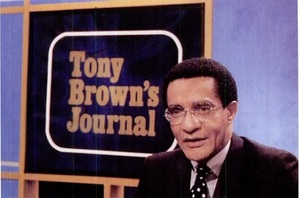
BELOVED MEDIA MOGUL AND JOURNALIST TONY BROWN OF "TONY BROWN'S JOURNAL" DIED AT AGE 93. |
By: Richard Prince, Journal-isms N2Entertainment.net
N2Entertainment.net
Tony Brown, legendary host and executive producer of television's pioneering "Black Journal," later "Tony Brown's Journal," and founding dean of the journalism school at Howard University, died June 17 at his home in Newport News, Va., his office announced. He was 93 and died of coronary heart disease.
An obituary prepared by his office said "Tony Brown's Journal" was the longest-running series in the history of the PBS network. "Black Journal ran from 1968 until 2008, when it changed its name to "Tony Brown’s Journal." The show was part of a wave of Black news and public affairs programs that followed the uprisings of the 1960s and the Kerner Commission's 1968 admonition that almost all media reporting on the Black community "reflects the biases, the paternalism, the indifference of white America."
When "Tony Brown's Journal" was revived in 2018, the promotional material said, "For over 50 years, Brown has a pioneer among African-American broadcasters and educators. Never shying away from controversy, his program was one of the first to report nationally on the infamous 'Tuskegee Experiments,' he shined a spotlight on the Tulsa Race Riots of 1921 and offered a platform for a galaxy of African-American luminaries.
"Brown has won numerous industry awards and served as Founding Dean of Howard University's School of Communication and later Dean of Hampton University's School of Journalism and Communications. . . . "
A video of this journalist interviewing psychiatrist Francis Cress Welsing on Brown's show in 1976 is still circulating on the internet. Hearing that, another journalism veteran exclaimed, "Every Black person I knew watched the Tony Brown show."
Brown's cremation is listed on the website of the Neptune Society of Virginia Beach, Va. The official obituary says, "No memorial or public service has been planned at this time."
It also says, "Brown was an influential television journalist, educator, and civil rights advocate whose groundbreaking work elevated Black voices in media and higher education for more than four decades. Widely regarded as a champion of truth, empowerment and opportunity, Brown dedicated his life to the principle of ‘self-help’ and the pursuit of excellence. . . .
"Activism was central to Brown's work. In addition to maintaining a strong presence in community-oriented programming, he launched initiatives aimed at advancing economic and educational opportunities for African Americans. Called 'Television's Civil Rights Crusader' in a cover story by Black Enterprise magazine, Brown also played a significant role in the civil rights movement.
"This self-help proponent coordinated a Detroit march in 1963, that featured Martin Luther King, Jr. and, according to Business Week magazine, drew an estimated 500,000, perhaps the largest civil rights march in America. It is also believed to be the first time Dr. King delivered his famous 'I Have A Dream' speech. USA Today selected Brown as one of the top five leaders to analyze the status of Black America. . . "
EDITOR'S NOTE: Washington Post journalist Richard Prince occasionally submits his column "Journal-isms" to "Media Matters." Prince's "Journal-isms" originates from Washington, D.C. To check out Prince's complete "Journal-ism's" columns log on to: http://mije.org.
IN OTHER "MEDIA MATTERS"
Compiled By: Lana K. Wilson-Combs
Congratulations are in order for Richard Prince, author of the "Journal-isms" column, CEO of Journal-isms Inc., and contributor to N2Entertainment.net's "Media Matters."
Prince has been named the recipient of this year's Everett C. Parker Award, honoring his outstanding contributions to media coverage, the United Church of Christ's Media Justice Ministry recently announced.
The award is "given to an individual whose work embodies the principles and values of the public interest in telecommunications and the media."
Prince is being recognized "for decades of work holding the news industry accountable on questions of race and representation, from his early career as a member of The Washington Post's Metro Seven to his founding of 'Journal-isms,' the column he created in 1991 that monitors and reports on diversity issues in the news media."
Bravo. Well deserved!
|


